
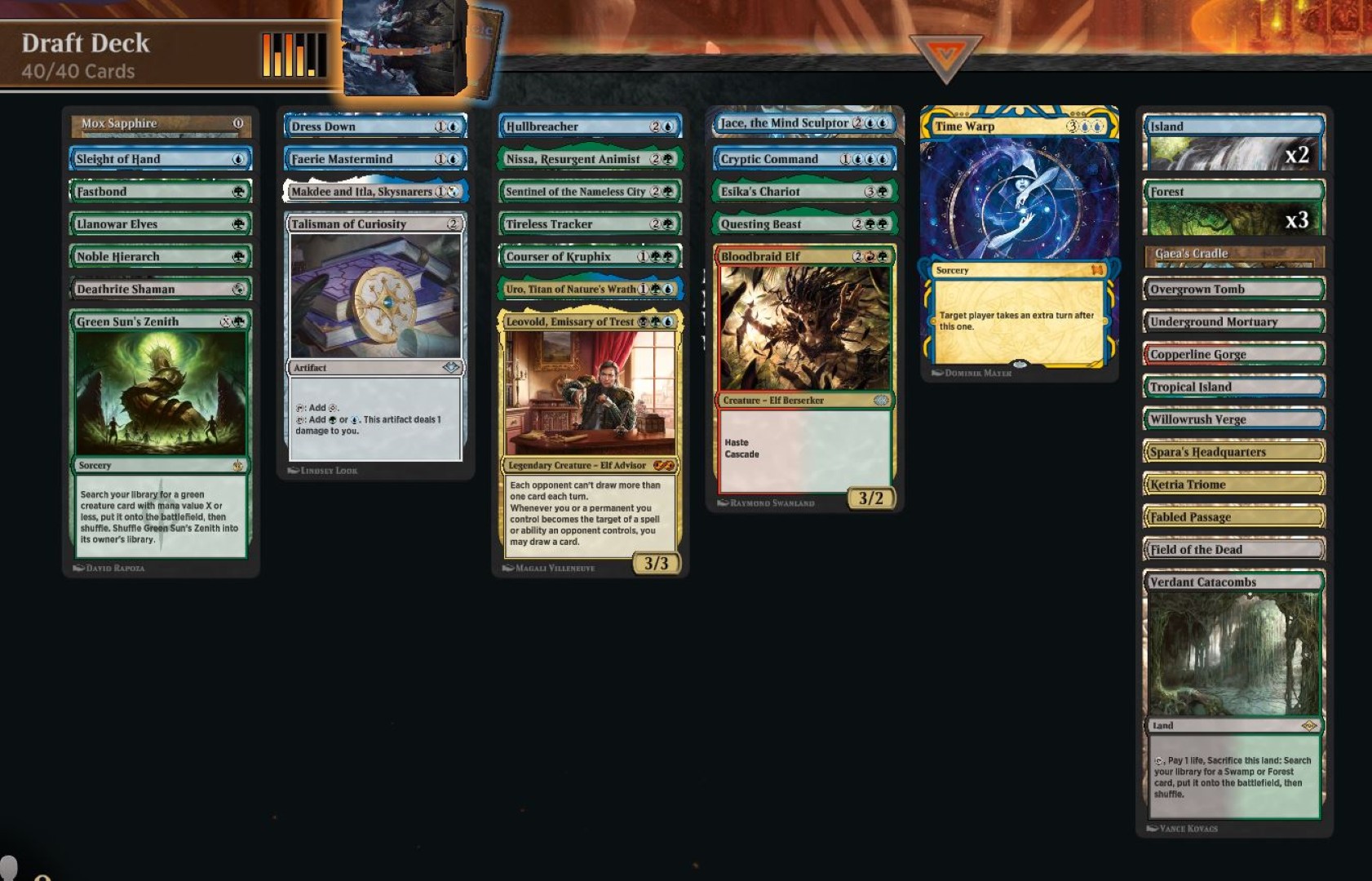
This primer helps brand-new cube builders learn how to build an MTG cube by picking a size, setting a vibe, and using a simple “starter skeleton” you can tune after your first draft.
TLDR
- Start with 360 cards unless you have a clear reason not to. It cleanly supports the classic 8 players, 3 packs of 15 draft.
- Pick one vibe for your first cube (classic “good Magic,” synergy-lite, or theme/set). Don’t try to do everything at once.
- Your first cube succeeds on fixing, curve, and interaction, not on having the “perfect” pet cards.
- Keep multicolor tight (so drafters aren’t trapped) and give people enough lands to actually cast spells.
- Draft it, take notes, change 5–15 cards, repeat. That loop is the hobby.
What a cube is (and why it’s addictive)
A cube is basically your own custom draft “set.” You curate a pool of cards, shuffle it up, make packs, draft, build decks, play, then put everything back so you can do it again next week.
The reason cube is so fun is also the reason it can feel intimidating: you’re not just picking cards, you’re designing the whole experience. The trick is to make your first cube boring on purpose (in the best way). Clean mana, clean games, clear decisions. Once it drafts smoothly, you can start getting weird.
How to build an MTG cube: the 10-minute plan
Before you pick a single card, answer these three questions:
- How many players do you usually have?
If it’s often 6–8, the classic cube sizes work great. If it’s usually 2–4, you can still cube, you just want formats and sizes that don’t feel repetitive. - What’s the vibe? Pick one:
- Classic “good Magic” cube: creature combat matters, removal matters, decks feel like powerful Limited.
- High-power “greatest hits” cube: splashy plays, fast mana, big swings, higher variance.
- Theme or set-feel cube: one set, one plane, one mechanic, or “this is my group’s favorite era.”
- How much complexity can your group tolerate right now?
For a noob-friendly cube, you want more “read the card, make a play” and fewer “assemble three pieces or do nothing.”
If you do only one thing right, do this: choose a vibe and protect it. Your cube will feel coherent immediately.
Cube size: start with 360 (and here’s why)
The classic draft is 8 players × 3 packs × 15 cards = 360 cards drafted. That’s why so many first cubes start at 360: you can draft the entire cube in one go with a full pod, which makes the experience consistent and makes your tuning notes actually mean something.
If you’re not usually at 8 players, bigger cubes can still be great, but you’re trading consistency for variety. Bigger lists are harder to balance and it’s easier for synergy packages to “whiff” because drafters simply won’t see enough of the pieces.
Quick size picker (with real tradeoffs)
| Cube size | What it’s best for | Typical draft use | Pros | Cons / gotchas |
|---|---|---|---|---|
| 180–240 | 2–4 players, frequent play | Small-group draft formats | Fast to build, easy to tune | Repeats fast if you always do the same draft style |
| 360 | First cube, 6–8 players | 8p 3×15 uses all cards | Most consistent drafts, easiest tuning | Less “novelty” if your group craves constant new cards |
| 450 | Regular group, wants more variety | 8p drafts 360 of 450 | More replay, still manageable | Slightly less reliable synergy, more balance work |
| 540 | Variety-heavy groups, bigger events | 8p drafts 360 of 540 | Tons of replay, more archetype room | Harder to keep lanes clear, more upkeep |
| 720+ | “Story draft” groups, huge variety | Set aside undrafted cards | Maximum novelty | Dilution risk, archetypes need more density to show up |
My noob recommendation: build 360, draft it 3–5 times, then decide if you want 450/540 because you’ll know what you’re actually missing.
The starter skeleton: what your first cube needs to function
New cube builders usually over-focus on “sweet cards” and under-focus on the boring stuff that makes drafts work to make a good cube. Here’s the core idea:
Drafts feel good when players can cast spells, interact, and curve out.
So your cube needs:
- Mana fixing (so two-color decks are normal and three-color decks are possible)
- Cheap plays (so games start before turn 4)
- Interaction (so games aren’t just goldfishing)
- A reasonable top end (so finishers exist but don’t clog hands)
A simple approach that keeps drafters out of trouble:
- Keep multicolor (gold) cards low early on. Gold cards are powerful, but they can trap newer drafters into “I took two gold cards so I guess I’m that guild now.”
- Put more power into monocolor cards and fixing lands. That makes pivoting easier and drafts read cleaner.
If you want one “training wheels” rule: every two-color deck should have access to enough fixing that it can reliably cast its spells. When in doubt, add lands before you add more spells.
A concrete “starter feel” target (not a law)
For a first 360:
- Fixing lands: enough that most decks can pick up 3–6 fixing pieces without fighting too hard.
- Multicolor: about 2–4 cards per guild (start lower if your group is new).
- Curve: make sure each color has real 1s and 2s, not just “good 4-drops.”
- Interaction: removal and counterplay spread across colors, so games aren’t decided by a single unanswered card.
(And yes, one iconic cheap spell really does shape how drafts feel. A card like this is the vibe.)
[mtg_card name=”Lightning Bolt”]
Pick archetypes the beginner way: “lanes,” not puzzles
For your first cube, you don’t need eight ultra-specific archetypes. You need lanes that naturally produce functional decks.
Think like this:
- Aggro lane: low curve, pressure, some reach
- Midrange lane: value creatures, removal, planeswalkers, stabilizers
- Control lane: card advantage, sweepers, big finishers
- Synergy seasoning: tokens, graveyard value, artifacts, spells-matter (but keep it optional)
The easiest beginner archetypes are the ones that overlap:
- Tokens overlaps with sacrifice, counters, and go-wide
- Graveyard value overlaps with reanimator-lite and delirium-style play
- Artifacts overlaps with ramp, equipment, and value engines
- Spells-matter overlaps with tempo and control
Overlaps matter because they let a new drafter “end up with a deck” even if they didn’t draft perfectly.
Draft-night setup that makes your cube feel legit
You can have an amazing list and still have a clunky night if setup is chaos. Here’s the short checklist that keeps cube night smooth:
- Sleeves (all the same type, ideally all the same age)
- Basics station (a box of basics people can grab freely)
- Tokens + dice (the boring glue that keeps games moving)
- A clear pack plan (so you’re not inventing math at the table)
- A quick way to reset (everyone returns cards to one pile, then you sort later)
For pack plans:
- Full pod: make 24 packs of 15.
- 4 players: you can still do 3×15 each (you’ll draft 180 cards), or use a small-group format like Winston or grid draft if you want to see more of the cube per session.
The first-tuning loop (how cubes actually get good)
After your first draft, don’t rebuild the cube. Change 5–15 cards and run it back.
The easiest, highest-impact tuning moves are:
- Add fixing if players are stumbling on mana.
- Lower curves if games start too late or aggro can’t exist.
- Add interaction if one deck keeps doing “my thing” uncontested.
- Cut narrow gold cards if drafters feel trapped early.
Your cube doesn’t need to be perfect. It needs to be draftable, then it needs reps.
FAQs
Do I have to start at 360?
No, but 360 is the cleanest “default” because it matches a full 8-person draft perfectly. If you mostly play 2–4 players, smaller cubes can work great, especially with draft formats designed for small groups.
Do cubes have to be singleton?
No. Singleton is common because it increases variety and makes drafts feel more like “discovering a set,” but breaking singleton can help certain themes or small-group environments.
How many lands should I run?
Enough that most decks can reliably be two colors and have the option to splash. If your drafts produce a lot of color-screw complaints, the answer is almost always “add more fixing lands,” not “tell people to draft better.”
What if I don’t own the cards?
You can build from your collection, copy a public list, or use printed play pieces to get reps quickly. The important part is having one consistent, readable version of the cube so everyone is playing the same game.
How often should I update my cube?
Only when you have a reason. A good cadence is “after 3–5 drafts, change a small batch.” Constantly changing the whole list makes it hard to learn what’s actually working.